
When he said “Niet”
The height of the crisis and the decisive performance of Vasili Arkhipov
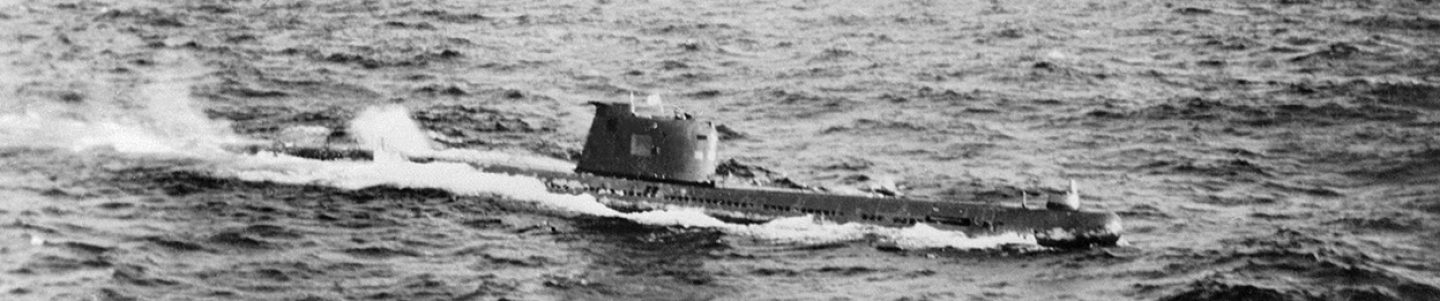
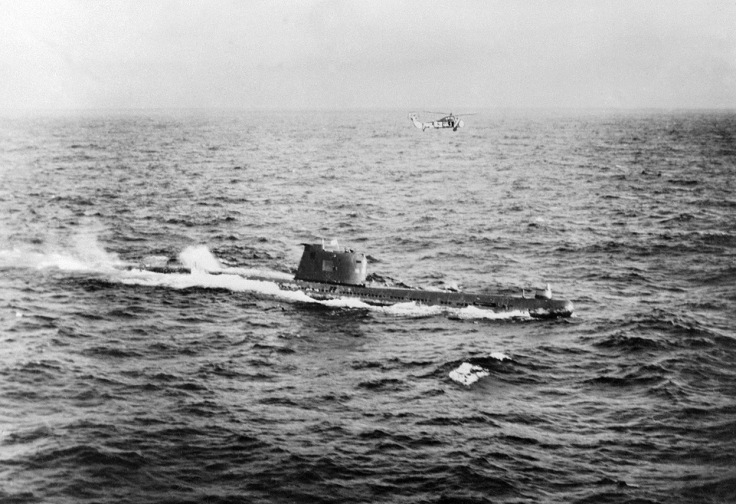
On October 27, 1962, a group of eleven destroyers and an aircraft carrier, the USS Randolph, located the B-59 submarine in the quarantine zone. Despite being in international waters, the Americans chased them for hours and even threw grenades and depth charges at them in order to force them to surface. This provocative and challenging action was basically due to the fact that they knew from the characteristics of the submarine that was carrying a crew of 22 torpedoes but were unaware that one of them had been replaced by a nuclear charge, as we have already seen.
On the other hand, the commands of the submarines had not had any contact with Moscow for several days and had to tune in radio stations from the United States and Cuba to take care of the seriousness of the situation and that the war could be declared at any time. After more than twenty hours of harassment and persecution, the exhausted captain of the submarine, Valentin Grigorievitch Savitsky, thought that the war had already begun and that they didn’t know after being so many hours submerged and without possible connection nor with the neighbouring radios neither with the Moscow authorities. That’s why he wanted to shoot the “special weapon” (that’s how they called it) against his persecutors.
As in the other submarines of the flotilla, the instructions received at the time of boarding were that, in the absence of the possibility of connecting with Moscow, the unanimous agreement of the three superior officers of the ship would allow the nuclear launch. Captain Valentin Savitsky, political commissar Ivan Semonovich Maslennikov and captain Vasili Arkhipov would have been enough. The first two agreed but Arkhipov, who had the same gradation as Savitsky but who was above him as Commander of the Barracks, was not only resounding with his “NO” to support the nuclear attack, but also ordered that the submarine would emerge immediately and would wait orders from Moscow.
According to the author Edward Wilson, the reputation that Arkhipov had acquired for his exemplary conduct in the nuclear submarine K-19, cited earlier, also helped to prevail his opinion. Arkhipov -according to him- rather persuaded and made come to reason an over-excited (with sufficient reasons) Savitsky. Also -according to Olga Arkhipova- the dramatic experience of him with those dying young men in his arms, would have conditioned that he could not contribute to the same thing happening on a planetary level.
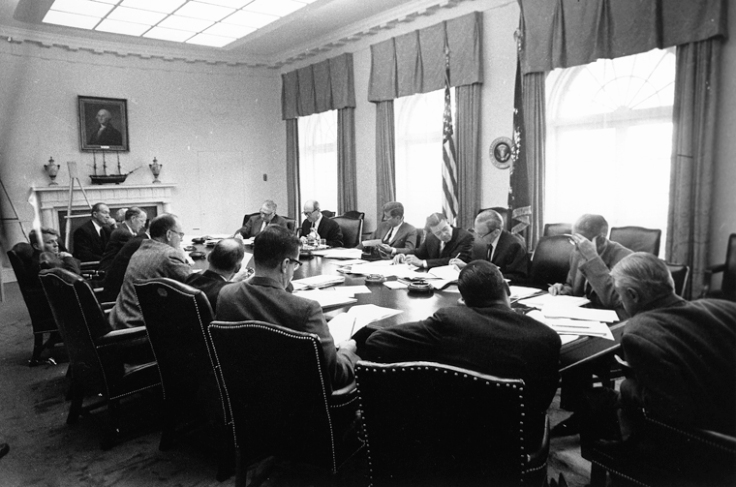
Thus, effectively, he avoided the nuclear war that undoubtedly would have started given the extreme tension in the EXCOMM, (The Executive Committee appointed by Kennedy to deal with the Crisis) due to various disastrous events that had occurred during the last hours and, in those, that had not been previously fulfilled in their womb. The worst was the despondency of Captain Anderson’s U-2 and his death by a SAM rocket fired from Cuba and not having taken the relevant reprisals. The most reactionary members of EXCOMM, the so-called “hawks” were reaching the limit of their patience with Kennedy.
Despite all this, immediately after returning to Russia, the officers of the submarine flotilla had to face reprimand and sanction from their superiors. They were summoned to Moscow, and each of them had to present a report with the events that occurred during the mission directly to the Minister of Defense, Andrei Grechko, who is chairing the meeting. The main problem was that the US military humiliated them by forcing them to surface, and the excuse that they did so because they needed to breathe was not enough. An admiral went so far as to say: "I would have preferred they had sunk with his ship." Another officer commented on Grechko's violent reaction when he learned that it was Diesel submarines that had gone to Cuba instead of nuclear ones, as he had thought. He took off his glasses, slammed them against the table and smashed them into a thousand pieces. After that, he left the room in a very bad mood.
Olga, Arkhipov's widow, explained during our interview that, finally, the person who resolved the situation was the Minister of the Navy, Gorshkow, who said that he would take care of the situation and the sailors and impose the sanction they deserve. Olga Arkhipova added that the Minister supported and helped them, as he was the only one who understood the situation.
When Robert McNamara, who had been US Defense Minister 40 years earlier, he participated in the 2002 Havana Conference and summed up the situation, he said: “We were very close to the Nuclear War, in fact, closer than we knew then.” Schlesinger Jr., a counselor of John F. Kennedy and well-known historian, added: “This was not only the most dangerous moment of the Cold War, but the most dangerous moment of humanity” ..